
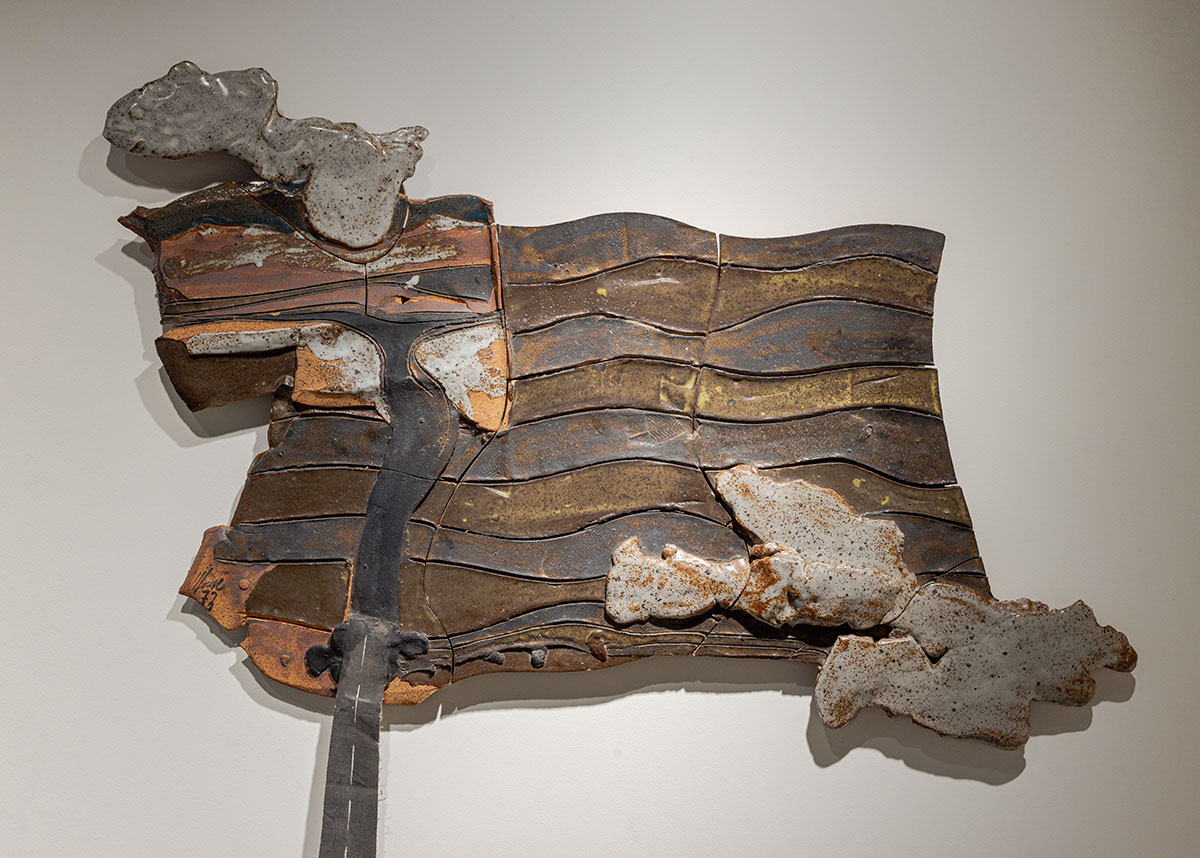
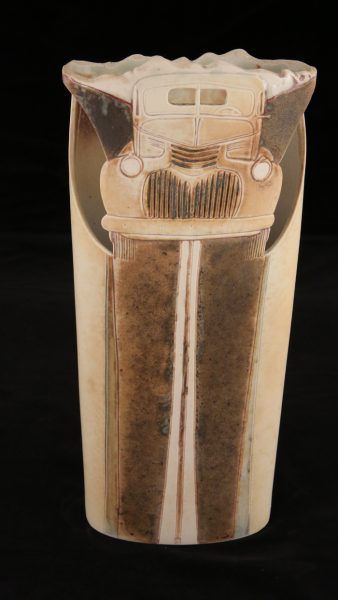
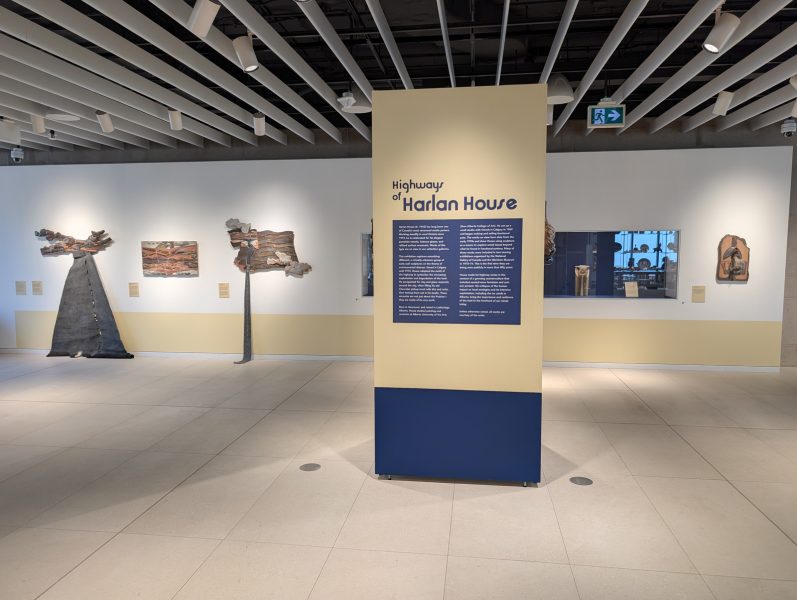
Harlan House (b. 1943) has long been one of Canada’s most renowned studio potters. Working steadily in rural Ontario since 1973, he is celebrated for his elegant porcelain vessels, lustrous glazes, and refined surface ornament. Works of this type are on view in our collection galleries.
This exhibition explores something different: a virtually unknown group of early wall sculptures made by House on the theme of environmental distress. Based in Calgary at the time, the artist adopted the motif of the highway to symbolize the increasing exploitation and degradation of the land. House prospected for clay and glaze materials around Calgary, often filling his old Chevrolet pickup truck with dirt and rocks, then driving home to test them out. These are not just about the prairies—they are made of that very earth.
Born in Vancouver and raised in Lethbridge, Alberta, Harlan House studied painting and ceramics at Alberta University of the Arts (then Alberta College of Art). He set up a small studio with friends in Calgary in 1969 and began making and selling functional pots.
The works on view here date from the early 1970s and show House using sculpture as a means to explore social commentary beyond what he found in functional pottery. Many of these works were included in two touring exhibitions organized by the National Gallery of Canada and the Glenbow Museum in 1973-74; this is the first time they are being seen publicly in more than fifty years.
House was prescient in his concern about the threats of human impact on the land. Intensive exploitation, not least of the tar sands in Alberta, has brought the fragility and resilience of the land to the forefront of our minds today.
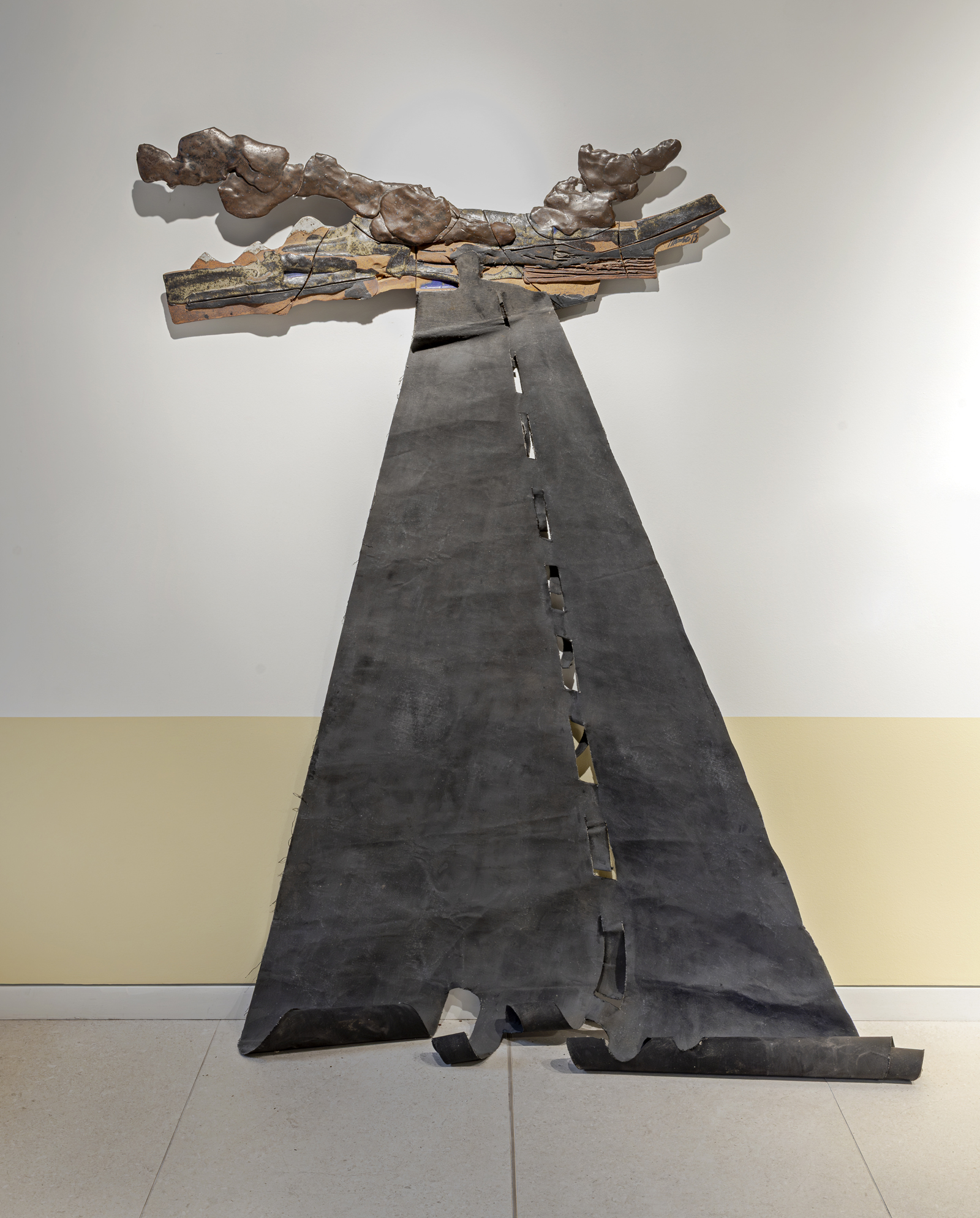
Three Sisters, 1973
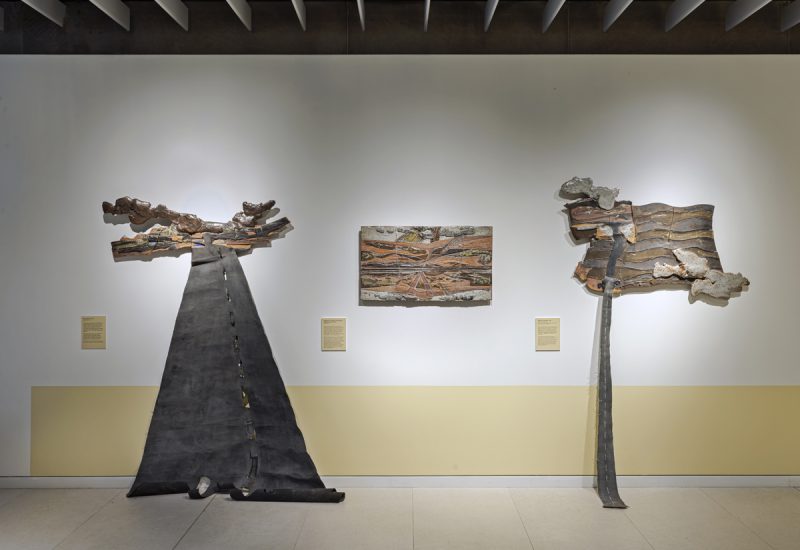
In Three Sisters, Harlan House creates the illusion of a distant landscape entering the space of the viewer through a highway in forced perspective. He uses ceramic to render the landscape, and painted canvas for the road: clay representing the earth and a manufactured material for our intervention on the landscape. The highway dominates our view, dwarfing the majesty of grasslands transitioning into mountains.
House made this work just as a new section of the trans-Canadian highway was being completed connecting Calgary to the foothills of the Rocky Mountains. Wider and straighter than before, it improved access for recreation and development, increasing the human footprint on the land.
The three peaks of the Sisters mountains appear on the left of the sculpture, dwarfed by the new highway.
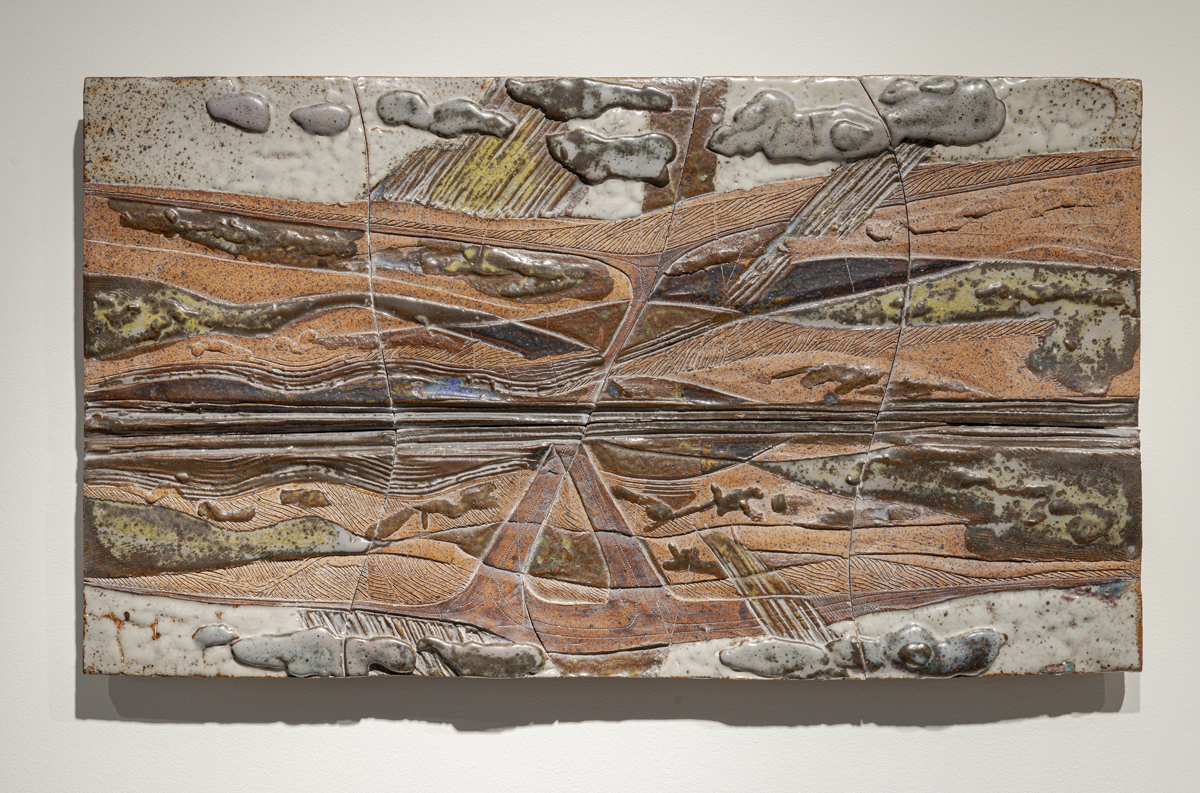
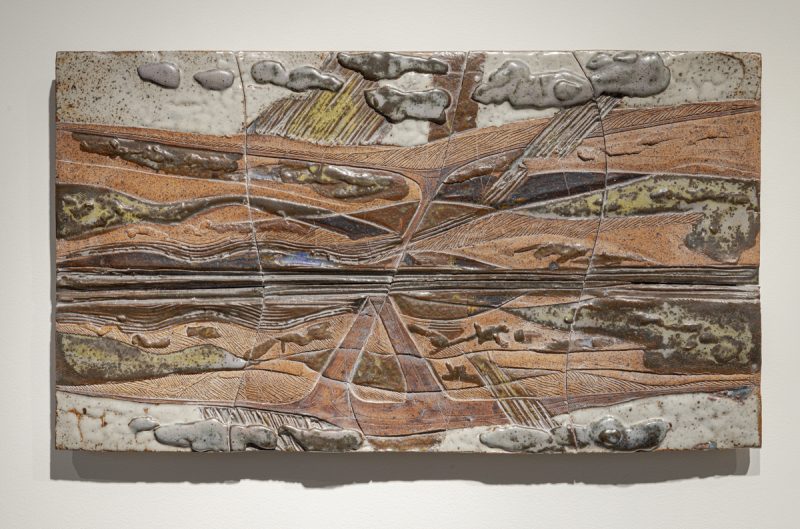
Maquette, 1974
Harlan House made this work as a maquette, or 3D sketch, for a mural commissioned by AGT (Alberta Government Telephone), which later became Telus. The maquette depicts the fields, hills, and stormy skies of Alberta. A dark highway divides the landscape, creating a mirror image. In the foreground, another roadway approaches and then makes a U turn, suggesting that we as a society should change course to avoid further environmental degradation.
Ceramic murals were popular from the 1950s through the 1970s, animating corporate and civic spaces like office buildings, banks, and utilities. Such projects were an important means of bringing art to the public, while also helping to support local and regional artists. With increasing privatization and pressure for profitability, such projects now appear principally in corporate headquarters, if at all. House’s mural was completed in 1974 in an AGT building in Calgary and measured nearly five and a half metres wide. It is no longer extant.
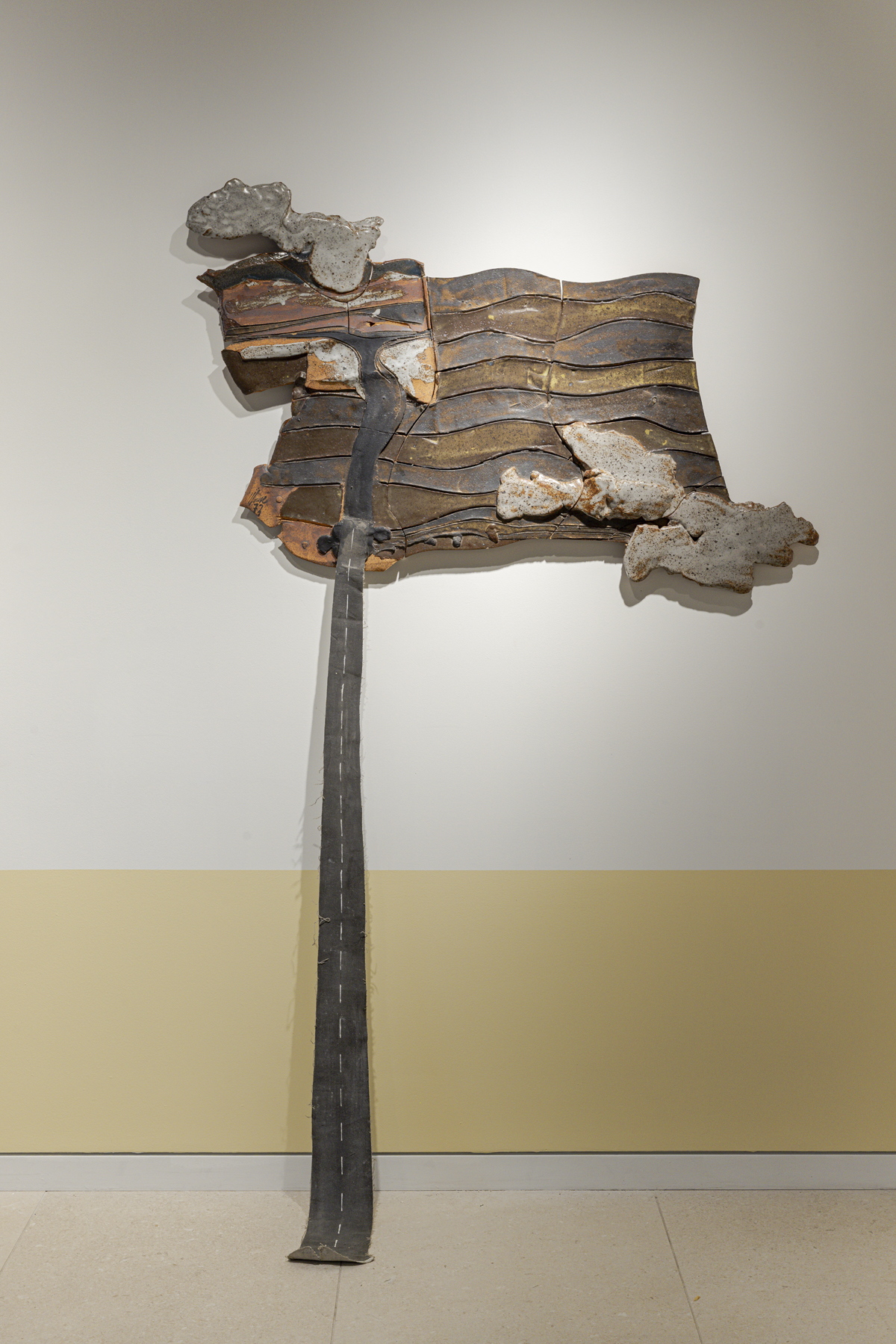
US Flag – Alberta Landscape, 1973
Donated by Douglas and Joyce Meredith, 1998. Collection of the Art Gallery of Burlington, 1998.
This work renders the flag of the United States as an Albertan landscape. Green and brown fields, hills, and fluffy clouds replace the original stars and stripes. A highway pours out of the field in the upper left, beginning in ceramic before transitioning to canvas. The perspective toggles between looking down and looking across, suggesting the instability of our vantage point.
House describes making US Flag in response to the flood of large, gas-guzzling cars and trucks that the US auto industry imported into Canada at the time. These vehicles enacted a physical domination of the landscape, while representing outsized cultural influence as well. With separatist impulses still active in Alberta, including murmurs about the possibility of joining the US, this work remains pertinent today.
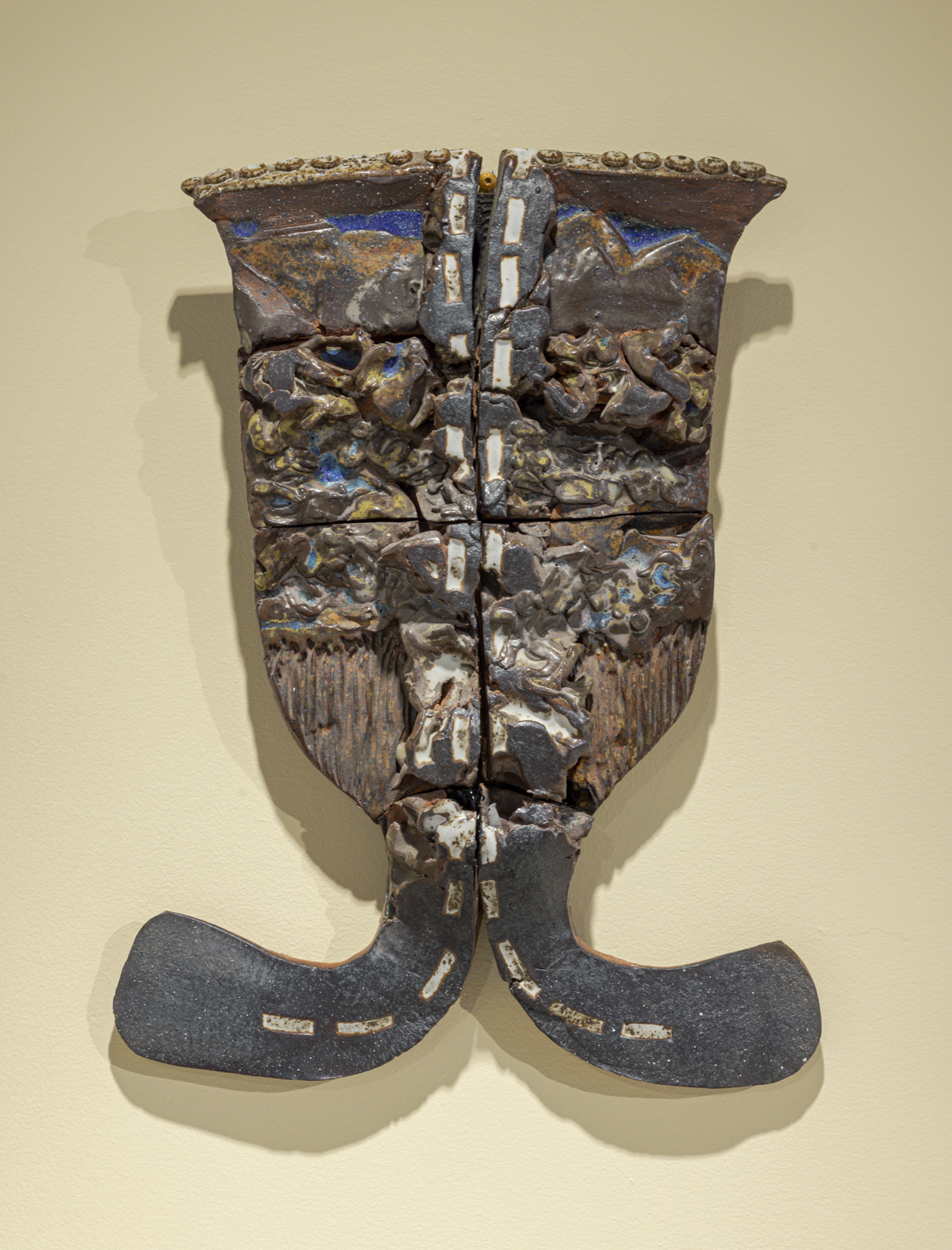
New Alberta Coat of Arms, 1970
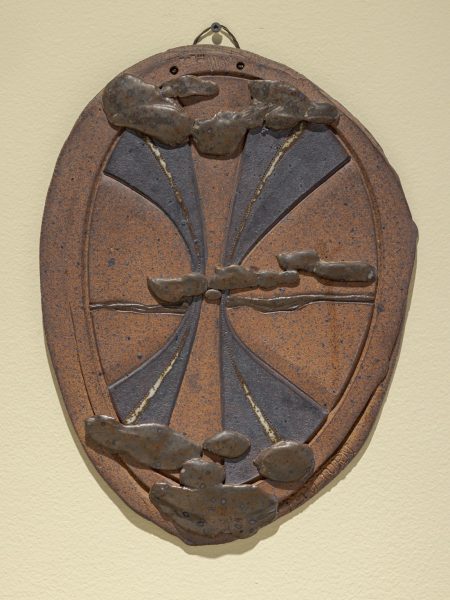
In this work, the artist re-imagines the Coat of Arms of the Province of Alberta for the 1970s. Based on European heraldry, provincial coats of arms symbolize the attributes of each province and serve as emblems on flags and official communications. They also reinscribe settler control of the land, visualizing Indigenous territory as westernized.
In House’s version, a highway bisects the form, overlaying the plains and fields of grain with the regular ticking of lane dividers. The split tail suggests both the extension of the highway system and beaver tails.
In the 1960s and 1970s, Alberta expanded and modernized its highways. One of the main arteries, Highway 2, widened to become a split median roadway with a minimum of four lanes, forming the quaintly named Deerfoot Trail in the area around Calgary. In the work, House alludes to the dominance of highways over the natural landscape and the increased environmental degradation that results.
In 1980, Queen Elizabeth II added the supporting animals and motto seen on the official arms today.
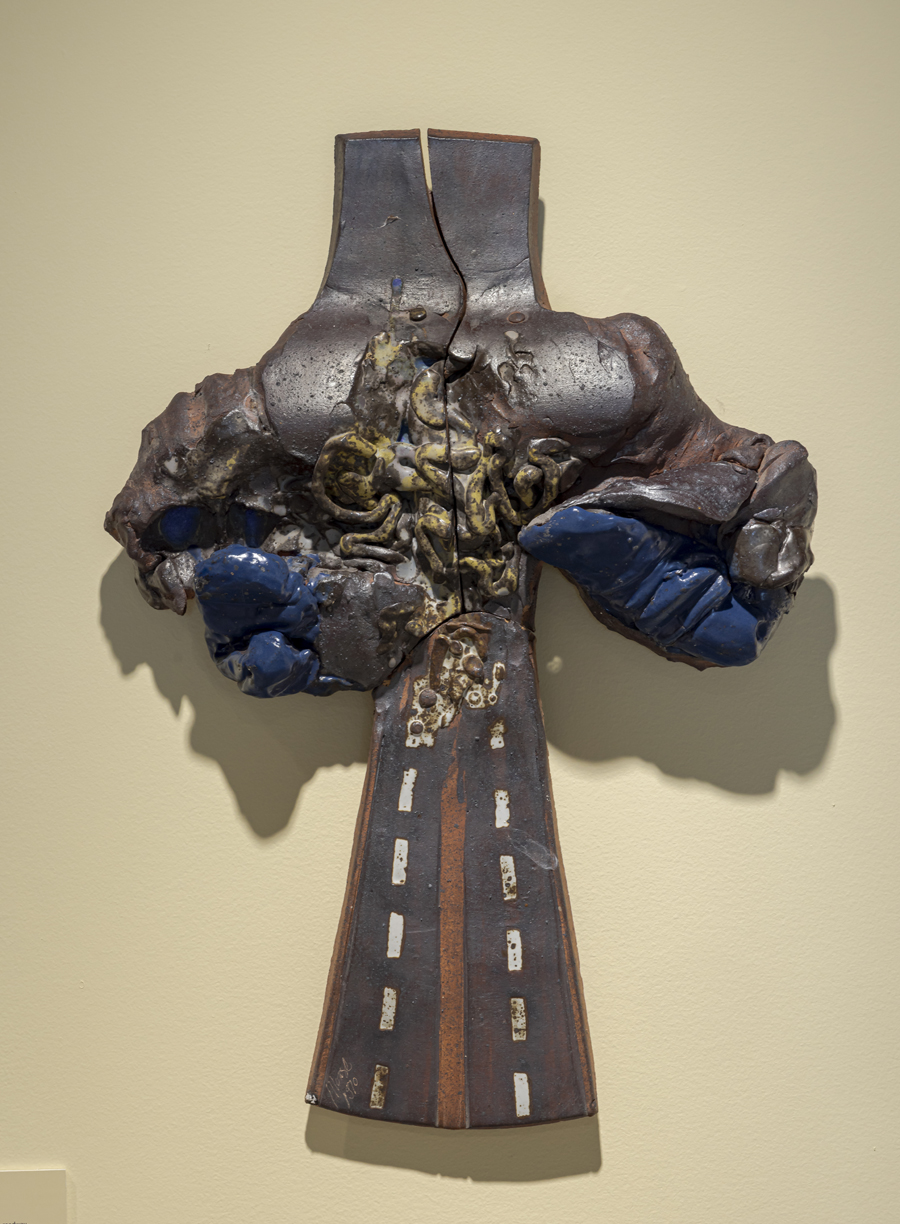
Highway Blues, 1970
In this work a split median, four lane roadway disappears into a varied mass with areas of blue and greenish-yellow glaze. What’s going on?
The wider section that seems to cross the roadway is meant to evoke a Volkswagen Beetle. First introduced to Canada in 1952, the Beetle was small and not very powerful, quite unlike the large American cars and trucks that dominated at the time (and today). By the 1970s, it was a pop culture phenomenon with hippie undertones. The artist describes how, in Calgary, it was an object of ridicule. Larger vehicles with powerful engines not only consumed more fuel, they also symbolized heightened masculinity (think of the monster truck).
This work connects House’s concern with the environment, expressed through the image of the highway, to consumerism and masculinity more broadly, highlighting how these issues are intertwined.
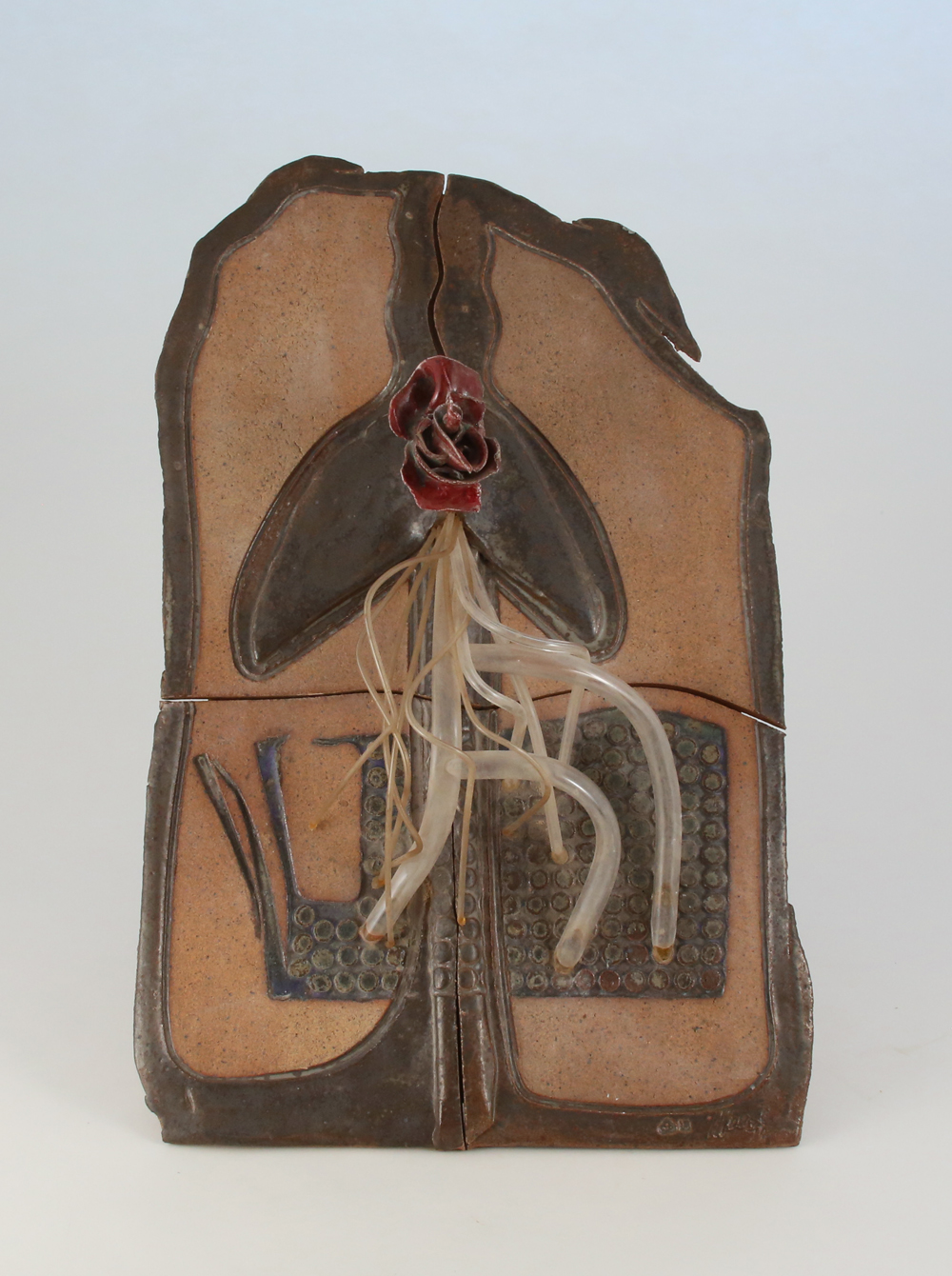
Forever Rose, 1970
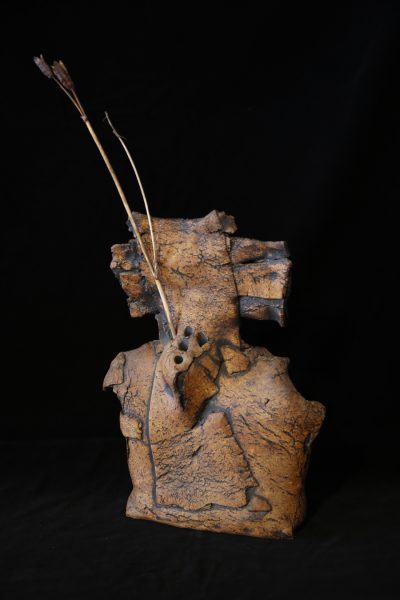
With a brightly glazed red rose and a mass of plastic tubing at its centre, this work points to industrial flower farming and the synthetic dyes used to enhance the blossoms. The form also suggests a heart, lungs, and circulatory system, perhaps reflecting on the impact of these chemicals on bodies and land. The red glaze on the flower, traditionally called oxblood, is particularly difficult to achieve and contrasts with the dry earth tones of the unglazed surface.
Link to Gardiner Museum Exhibition – Highways of Harlan House
Additional images from the Exhibition below:
Blog text adapted from gallery descriptions provided by Dr. Sequoia Miller, Chief Curator & Deputy Director, Gardiner Museum. All photos by Toni Hafkenscheid.
Comments 4
Magnificent !!!!!!!!!
I understand your artwork has to be very authentic to be displayed at this gallery! I can see why your art is there! Stunning and so meaningful! Thank you!
New to me and a treat to see. Be well Harlan.
Beautiful work! So pleased to see it.